OUR STORY

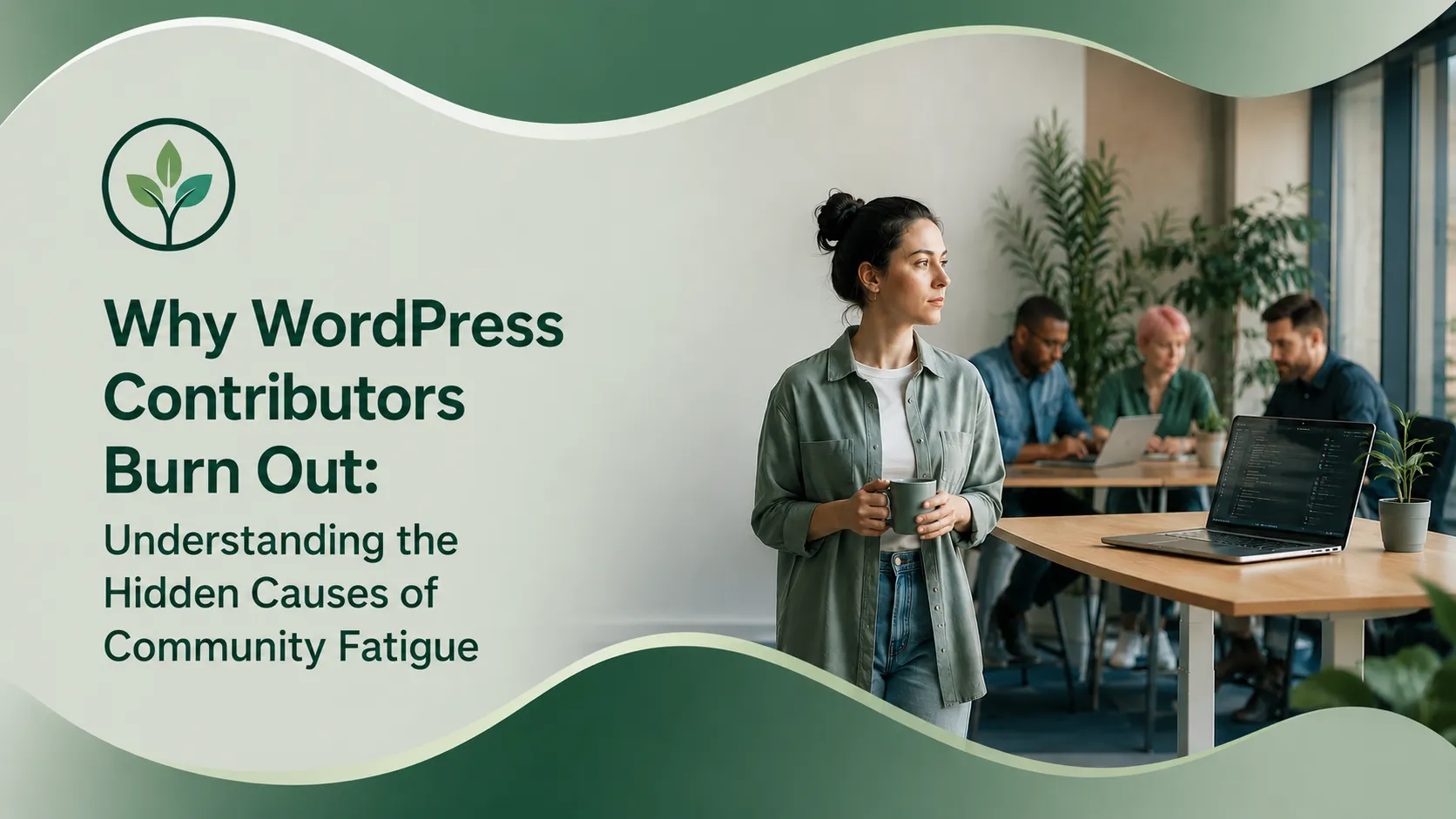
Why WordPress Contributors Burn Out: Understanding the Hidden Causes of Community Fatigue

Contributor Burnout in WordPress: Causes, Early Warning Signs, and Practical Strategies

Building a Healthier, Sustainable Open Source Contribution Journey

By WPWellbeing Editorial Team | Published: August 2026

Introduction

There is something remarkable about the WordPress community. Every day, thousands of volunteers worldwide review code, translate plugins, organize meetups, mentor newcomers, speak at WordCamps, and answer support questions. But generosity carries a hidden challenge. When contribution becomes constant, expectations grow, responsibilities pile up, and personal wellbeing quietly slips to the back of the queue — until even the most passionate contributors begin to feel exhausted. Sustainable contribution begins with sustainable wellbeing.

This isn’t a niche worry. In the 2024 Tidelift State of the Open Source Maintainer Report (surveying 437 maintainers), roughly 60% said they had quit or considered quitting a project they maintain — and 44% pointed to burnout as the reason. WordPress is built on exactly this kind of volunteer labor, making these pressures directly applicable.

At WPWellbeing, we believe caring for yourself is not separate from caring for the community. Whether you are a first-time contributor, a long-time volunteer, a WordCamp organizer, a plugin developer, or a community leader, this guide explains why WordPress contributors burn out, how to catch it early, and concrete habits that keep contribution healthy for years to come.

What Is Contributor Burnout?

Contributor burnout is a state of physical, mental, and emotional exhaustion that develops when ongoing contribution demands consistently exceed a person’s ability to recover. It is not the same as a busy week or a hard sprint — it is the result of a prolonged imbalance between effort, expectations, and rest.

The World Health Organization added burnout to the ICD-11 in May 2019, defining it as an occupational phenomenon resulting from chronic workplace stress that has not been successfully managed. The WHO identifies three dimensions: energy depletion or exhaustion, increased mental distance or cynicism toward one’s work, and a reduced sense of effectiveness.

Volunteer contribution isn’t identical to paid employment, but the mechanics overlap almost exactly: ongoing demands, deep emotional investment, and too little recovery. Within WordPress, that pattern can affect anyone — a first-time translator, a plugin maintainer, a Meetup organizer, or a Make WordPress team rep.


Why WordPress Contributors Are Especially Vulnerable

No contract requires anyone to answer a forum question, review a patch, or organize a WordCamp. People contribute because they believe in open source, enjoy learning, or want to give back. When work is driven by passion, personal limits get blurry.

Research from the Linux Foundation and Harvard’s Laboratory for Innovation Science found that nearly three-quarters of open source contributors also hold full-time jobs. Contribution is layered on top of paid work, freelancing, studies, caregiving, and family life — usually in evenings, on weekends, and during the hours meant for rest.

The 8 Hidden Causes of Community Fatigue

1. Passion without boundaries

Answering questions after dinner or reviewing pull requests before breakfast feels meaningful, but when generosity consistently replaces recovery, wellbeing declines.

2. Balancing contribution with everyday life

Layering community tasks on top of 8-hour workdays leaves almost no room for recovery. Reflection: “If I removed community work for one week, would I finally feel rested?”

3. The invisible emotional labor

Welcoming newcomers, mediating disagreements, moderating discussions, and encouraging teammates take real emotional energy that is hard to measure.

4. The WordCamp cycle

Behind WordCamps are months of volunteer planning. Returning straight to client work without resting causes excitement to mask accumulating fatigue.

5. Digital overload and “always-on” culture

Platforms like Slack, GitHub, and Trac create constant context-switching and pressure to be available, eroding deep focus and rest.

6. Feeling responsible for everything

Experienced contributors often feel things won’t get done unless they step in. Tidelift data shows 61% of unpaid maintainers work entirely alone.

7. Comparing yourself to other contributors

Comparing your output to others ignores differing life situations; sustainable contribution is about consistency, not comparison.

8. Forgetting that rest is part of contribution

Because community work never truly ends, waiting until everything is finished means rest never happens. Rest is what makes contribution sustainable.


Digital professional balancing paid work with open-source community contribution.

Early Warning Signs of Burnout

Burnout develops gradually. Watch out for these 8 common signs:

  • Constant Fatigue: Waking up tired even after a full night’s sleep.
  • Losing the Joy: “I have to attend another meeting” replaces “I get to contribute today”.
  • Difficulty Concentrating: Tasks take longer, and you bounce repeatedly between tasks.
  • Increased Irritability: Minor bugs or delayed replies trigger unusually strong reactions.
  • Guilt About Breaks: Constant urge to check Slack even while on holiday.
  • Reduced Creativity: Leaning on routine rather than curiosity; problem-solving feels draining.
  • Withdrawing: Skipping meetings and postponing messages due to low energy.
  • “Nothing Is Ever Enough”: Fixating strictly on unfinished tasks despite positive feedback.

Note: This article does not diagnose burnout. If your symptoms are severe, persistent, or affecting daily life, please speak with a qualified healthcare or mental health professional.


Burnout vs. Stress vs. Fatigue

Telling these experiences apart helps you respond appropriately.

DimensionStressFatigueBurnout
Typical DurationShort-termTemporaryLong-term
Main CauseHigh demandsPhysical/mental exertionProlonged demand/recovery imbalance
RecoveryImproves with restImproves with adequate restNeeds boundaries, lifestyle changes & support
MotivationUsually remainsReturns after restOften significantly reduced
Relationship with WorkFeeling overwhelmedFeeling tiredFeeling detached or exhausted

WordPress community volunteers taking time to recover after a busy event.

8 Practical Strategies for Sustainable Contribution

  1. Redefine what “good contributor” means: Being reliable doesn’t mean being always available. Adjust involvement based on life seasons.
  2. Create healthy boundaries: Set fixed hours, avoid late-night tasks, and protect weekends.
  3. Learn to say “not right now”: Use clear scripts like “I’d love to help, but I don’t have capacity this month”.
  4. Schedule recovery as deliberately as work: Plan post-WordCamp rest days, walks, or screen-free periods on your calendar before exhaustion happens.
  5. Focus on one meaningful contribution at a time: Depth in one area beats trying to be everywhere.
  6. Build healthy digital habits: Turn off non-essential notifications, work in focused blocks, and establish daily shutdown routines.
  7. Use AI thoughtfully: Lower your workload with AI summaries and automation without filling freed-up hours with more tasks.
  8. Celebrate progress, not perfection: Pause to acknowledge small wins, from helpful code reviews to documentation fixes.

How Community Leaders Can Reduce Burnout

WordPress is actively building wellbeing into the project through initiatives like the Sustainability Team and Five for the Future discussions. Leaders can foster a healthier culture by:

  • Normalizing taking breaks: Openly step away to show that taking time off is respected.
  • Sharing responsibility: Encourage co-organizers, rotating roles, and mentorship so no one carries a team alone.
  • Recognizing non-code contribution: Celebrate invisible work like moderation, documentation, testing, and welcoming newcomers.
  • Creating psychological safety: Build spaces where members feel safe asking questions, admitting mistakes, and raising concerns.
  • Checking in on people: Ask “How are you doing?” alongside “How’s the release going?”

Key Takeaways

  • Burnout develops gradually through accumulated pressure and postponed recovery.
  • Passion requires healthy boundaries to remain sustainable over time.
  • Recovery must be scheduled intentionally, not treated as a reward for exhaustion.
  • Community health is a shared responsibility between individuals and community leaders.

Conclusion

Contributor wellbeing is not about encouraging people to contribute less — it is about helping people contribute in ways that are healthy, meaningful, and sustainable. At WPWellbeing, we believe caring for yourself is one of the most valuable contributions you can make. Because when contributors thrive, communities thrive.

Join the WPWellbeing Community

Subscribe to receive evidence-informed articles, practical checklists, workshop templates, and invitations to wellbeing sessions.


Subscribe to Newsletter →

Faqs

WordPress contributor burnout is ongoing physical, mental, and emotional exhaustion that develops when contribution demands consistently exceed a person’s ability to recover. It affects volunteers across every role — from first-time translators to WordCamp organizers and Make WordPress team leads — and usually builds gradually rather than appearing overnight.

Not exactly. The World Health Organization defines burnout specifically as an occupational phenomenon tied to paid work. Contributor burnout happens in volunteer and community settings, but the underlying mechanics are identical: prolonged stress, deep emotional investment, and insufficient recovery over time.

It is widespread. The 2024 Tidelift maintainer survey found roughly 60% of maintainers had quit or considered quitting a project, with 44% of those citing burnout. An earlier Tidelift survey found 46% of professional maintainers had experienced burnout, rising to 58% for those maintaining widely used projects.

Common early signs include constant fatigue that rest doesn’t fix, losing the joy of contributing, difficulty concentrating, increased irritability, guilt about taking breaks, reduced creativity, withdrawing from meetings and discussions, and a persistent feeling that nothing you do is ever enough. Several signs together are worth attention.

Stress is usually short-term and eases with rest. Fatigue is temporary and improves after adequate rest. Burnout is long-term: it results from a prolonged imbalance between demands and recovery, often reduces motivation, and typically needs boundaries, lifestyle changes, and support rather than a single good night’s sleep.

Yes. While long-time contributors often carry more responsibility, newcomers can be overwhelmed by learning new processes, joining several teams at once, and balancing contribution with full-time work and personal life. Burnout is about the balance between demands and recovery, not about seniority or experience.

No. Taking a break is one of the most responsible ways to protect your long-term ability to contribute. Rest is not the opposite of contribution — it is what makes sustained contribution possible. Stepping back for a season often means you can keep contributing for years.

Set realistic expectations for your current season of life, focus on one meaningful area rather than everything at once, schedule recovery as deliberately as you schedule work, protect clear boundaries around your time, and ask for help when you need it. Consistency matters more than constant activity.

Used thoughtfully, yes. AI can summarize long discussions, draft documentation, and automate repetitive tasks, freeing time and energy for creative and community-focused work. The key is to keep reviewing AI output and add your own judgment — and to use the time saved for rest, not simply more work.

Community leaders can normalize taking breaks, share responsibility so no single person carries a team alone, recognize non-code and emotional labor, build psychological safety, and check in on contributors as people rather than only on project status. WordPress’s Sustainability Team and Five for the Future discussions reflect this shift.

Picture of Ranu Patel

Ranu Patel

About the Author:

Ranu Patel is the Founder of WPWellbeing, a community initiative dedicated to supporting wellbeing, personal growth, and sustainable work practices within the WordPress ecosystem and the wider digital community.

Through WPWellbeing, she brings together community members, industry professionals, and subject matter experts to foster conversations around workplace wellbeing, stress management, mindfulness, work-life balance, resilience, and professional growth. Her focus is on creating a supportive environment where individuals can learn, connect, and share experiences that contribute to healthier and more fulfilling careers.

WPWellbeing was established with the belief that professional success and personal wellbeing should go hand in hand. Through educational content, community events, discussions, and collaborative initiatives, the platform encourages open dialogue and practical approaches to navigating the challenges of modern work and digital life.

Articles published on WPWellbeing are informed by community experiences, research, industry insights, and contributions from professionals with relevant expertise. For topics that require specialized knowledge, content may incorporate insights from guest speakers, coaches, healthcare professionals, mental wellbeing practitioners, or other subject matter experts to help ensure accuracy and relevance.

Ranu oversees the editorial direction of WPWellbeing to ensure that all content supports the community's mission of promoting wellbeing, meaningful connections, and sustainable professional growth.

LinkedIn
X
Facebook
WhatsApp

Table of Contents

OUR STORY Why WordPress Contributors Burn Out: Understanding the Hidden...

WordPress Community Wellbeing

WordPress Community Wellbeing: Reflections From Our First Session

OUR STORY WordPress Community Wellbeing: Reflections From Our First WPWellbeing...

Share this:

Like this:

Like Loading…

Discover more from WP Wellbeing

Subscribe now to keep reading and get access to the full archive.

Continue reading